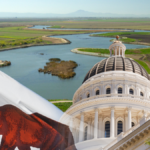
- Manteca Bulletin: SoCal killed off Owens Lake & Colorado River Delta; the Sacramento-SJ Delta is next
- Sierra Club: Can a Water Renaissance Put California on a Sustainable Path?
- The Guardian: Drought, water rationing and dry rivers: our water crisis is here
A recent editorial by Dennis Wyatt in the Manteca Bulletin criticizes irresponsible policies that have threatened critical water sources and ecosystems, contributing to concerningly low water levels in Mono Lake, Owens Lake, and the Colorado River Delta. Wyatt argues that California’s current approach to water management risks doing the same to the Sacramento-San Joaquin River Delta, as tightening restrictions on Colorado River usage lead powerful water users in Southern California to seek more diversions.
The editorial points to costly proposals like the Delta Conveyance Project (DCP), which would cost billions while damaging critical ecosystems and diverting resources away from local water needs. Instead, the author advocates for more pragmatic and sustainable solutions, including repairing aging levees and investing in local water supplies.
In another recent article, the Sierra Club raises similar concerns, uplifting the Water Renaissance Plan as a roadmap for developing sustainable local water supplies. The article notes that climate change, as was similarly argued in this Guardian opinion piece, and aging infrastructure are making large-scale diversions and imported water increasingly unreliable.
The Sacramento-San Joaquin River Delta already faces degraded water quality, declining fish populations, and harmful algal blooms, yet Governor Newsom and state water agencies continue to push forward projects like the DCP.
The sustainable strategies outlined in the Water Renaissance Plan, including stormwater capture, wastewater recycling, and water conservation, could generate between 1.8 to 2 million acre-feet of local water supply by 2045, at a lower cost than the DCP, while providing more resilient water supplies in the face of climate change.
As Barbara Barrigan-Parrilla, executive director at Restore the Delta, states, “To date, recommendations around restoration of the delta—from levee upgrades to use of tribal ecological knowledge, restored flows, and local restoration practices around land management—have taken a backseat in water planning to infrastructure that will not hold up to the climate change scenario.”