We’re focused on Harmful Algal Blooms (HABs), due to the health risks they pose to frontline Delta communities and local fisheries.
Driven by rising temperatures, nutrient pollution, and diminished freshwater flows, HABs now proliferate throughout the Delta. These blooms produce cyanotoxins linked to skin irritation, liver damage, and strokes, disproportionately affecting unhoused people and residents in disinvested areas. Cyanotoxins also kill fish that Tribal and BIPOC subsistence fishers rely on, and threaten agricultural irrigation and public drinking-water systems by depleting dissolved oxygen in water bodies.
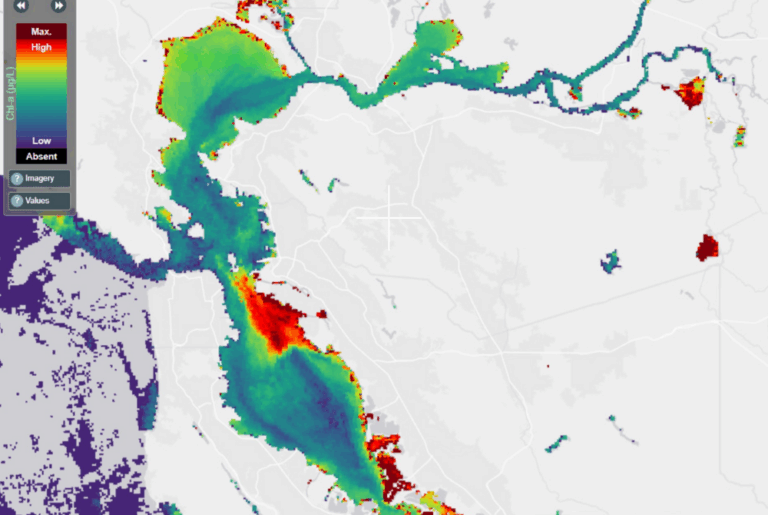
Developing new technologies and a coordination framework for an integrated HAB detection and monitoring system across the San Francisco Estuary. Our team conducts shellfish sampling from Delta freshwater-to-saltwater sites and testing for HAB toxins.
Project lead: San Francisco Estuary Institute
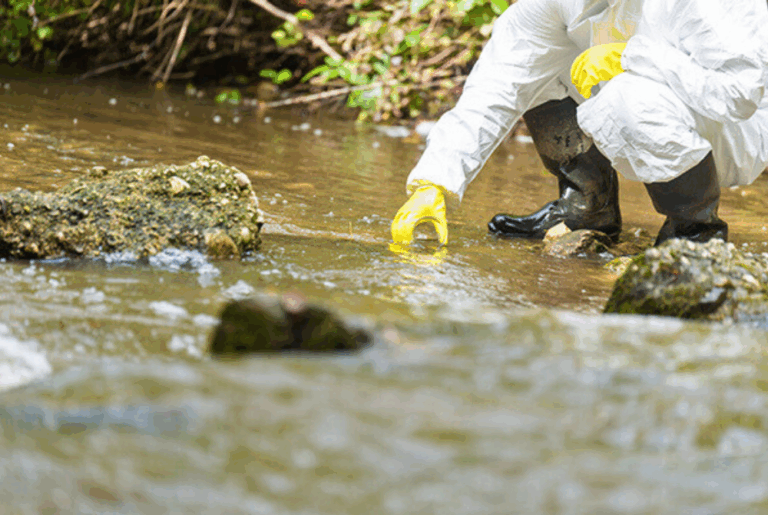
We provide water and sediment sampling as part of a five-year dredging study investigating HABs seed dispersal in the Stockton Deepwater Shipping Channel.
Project lead: Army Corps
We provide water sampling to inform the development of a HABs image classification model that can consistently classify bloom severity from photos.
Project lead: Coastal Conservation and Research, Inc.
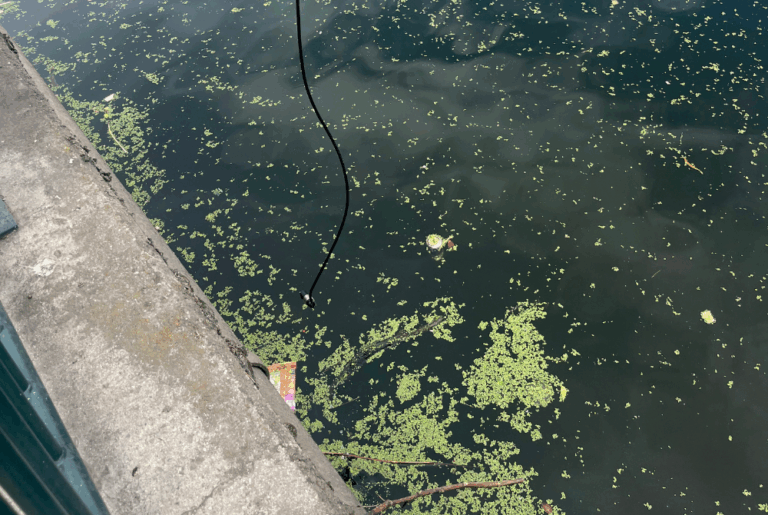
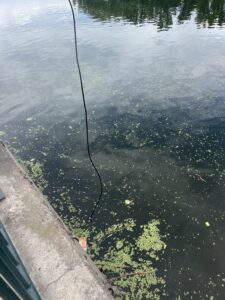
In summer 2021, we noticed a bad smell coming from the Downtown Stockton waterfront, where the water was dark and green. In the sweltering Central Valley heat, Harmful Algal Blooms (HABs) were thriving in our local waterways. There were no warning signs to let people know about possible health risks, and no active monitoring or reporting of these blooms.
Driven by rising temperatures, nutrient pollution, and diminished freshwater flows, HABs now proliferate throughout the Delta. These blooms produce cyanotoxins linked to skin irritation, liver damage, and strokes, disproportionately affecting unhoused people and residents in disinvested areas. Cyanotoxins also kill fish that Tribal and BIPOC subsistence fishers rely on, and threaten agricultural irrigation and public drinking-water systems by depleting dissolved oxygen in water bodies.
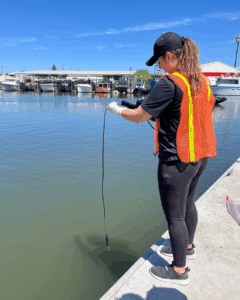
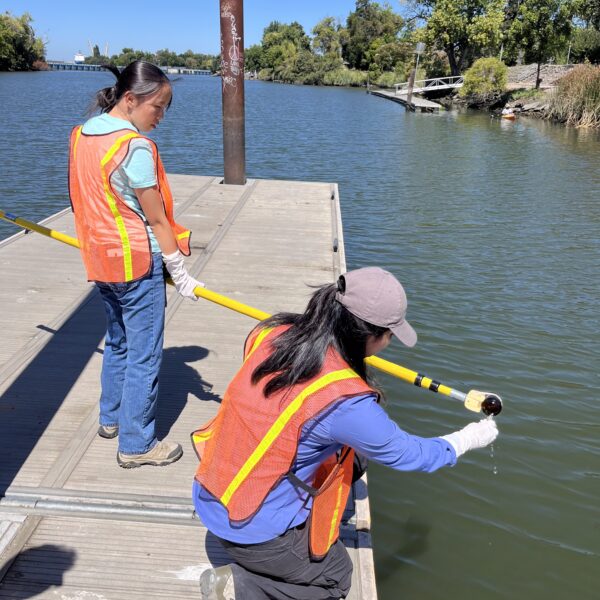
With training from San Francisco Baykeeper and the Central Valley Regional Water Quality Control Board, our team spent the summer testing the water for HABs and sharing what we found on social media to raise public awareness.
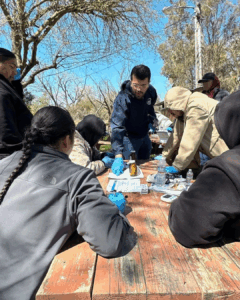
The following summer, we launched a student internship program that continues to lead HABs testing in local waterways throughout the summer months. The team submits water samples to a certified lab for verification and reporting to the state, and raises public awareness of HABs through emergency alerts and local education efforts.
Today, California still does not fund or resource a routine monitoring program for HABs in the Delta. We built our Delta Science Program to address the deficit of state leadership on this pressing local public health issue, and offer career training and mentorship to post-high school STEM students. Our goal is to protect water quality for communities living near or on the Delta and utilizing its waterways for recreation, sustenance fishing, sportsfishing, tribal cultural practices, and irrigation.
Spencer Fern is the Delta Science Program Manager for Restore the Delta. Spencer was born and raised in Stockton and spent his childhood living alongside Smith Canal where his family would take a boat out and enjoy the water life. He was introduced to Restore the Delta in high school where he got to work with National Geographic to take photos of the Bay and Delta to raise awareness for Delta conservation. Spencer received his degree in microbiology from California State University, Monterey Bay and he also went on exchange for a year to Stony Brook University in Long Island. In his free time, he enjoys spending time with friends and looks forward to the next time he can snowboard.
Connect: Spencer@restorethedelta.org